The near-collapse of London-based Market Financial Solutions (MFS) highlights structural vulnerabilities embedded in today’s private credit ecosystem. Founded in 2006, MFS specialized in complex, property-backed bridging loans — short-duration financing secured by transitional or hard-to-value real estate assets. At its reported peak, the firm’s loan book reached roughly $3.2 billion. In 2024, it added about $1.7 billion in new institutional funding and expanded or renegotiated roughly $1.4 billion in additional credit lines.
On Monday, a Blackstone private credit fund had to raise its repurchase cap to meet nearly $2 billion in redemptions, highlighting how quickly panic can spread. Major financial institutions were intertwined in the structure: Barclays reportedly had about $800 million in exposure, Apollo’s Atlas SP Partners around $500 million, and Jefferies roughly $130 million.
The firm also had ties to Santander and Wells Fargo. When stress emerged, and parts of MFS entered a UK insolvency process, confidence eroded quickly — underscoring the risks that arise when complex collateral, layered leverage, and short-term funding intersect.
This pattern is not accidental. Private credit expanded rapidly after 2008, when tighter capital rules and supervisory pressure pushed large banks away from asset-based lending, real estate bridge loans, and middle-market financing. Nonbank lenders stepped in to fill the void, often relying on funding lines from the very global banks that had reduced direct exposure to those risks.
When liquidity is abundant and asset values rising, the structure appears efficient and resilient. But when funding tightens or underwriting assumptions prove too optimistic, opacity, maturity mismatches, and embedded leverage can surface quickly. Risk may migrate outside the traditional banking perimeter, but it does not disappear.
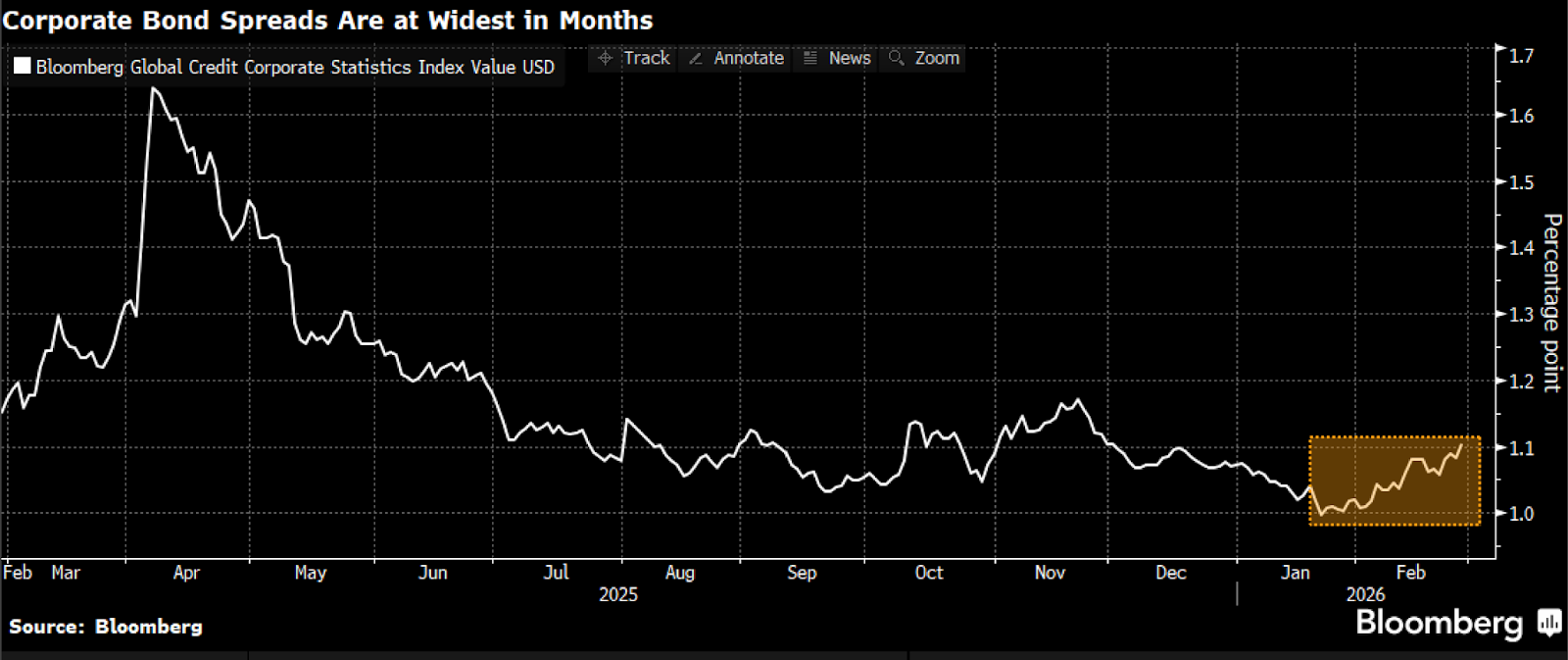
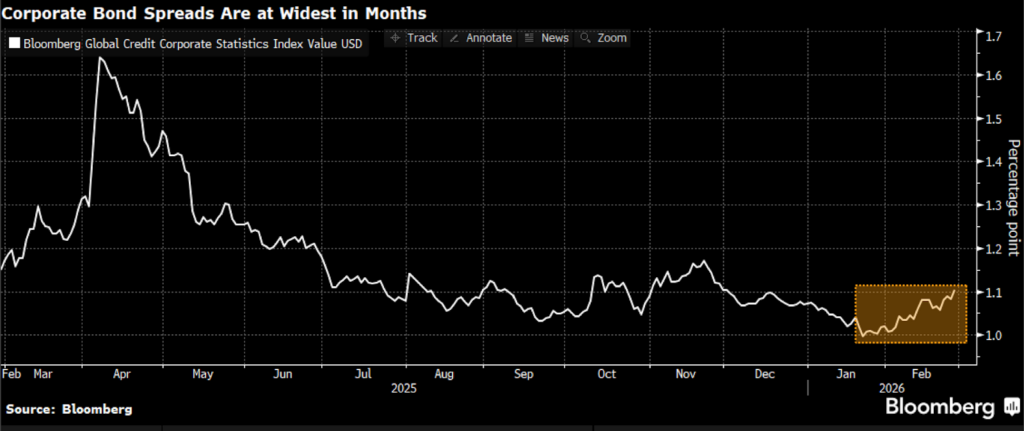
When parts of MFS entered a UK insolvency process, court filings cited “serious irregularities,” a significant collateral shortfall, alleged diversion of income streams, and possible double pledging of assets. Authorities have not accused anyone of wrongdoing, and the firm maintained the issue stemmed from a procedural banking dispute. Markets — in particular, credit spreads — are reacting sharply, and lenders have moved to reassess exposures.
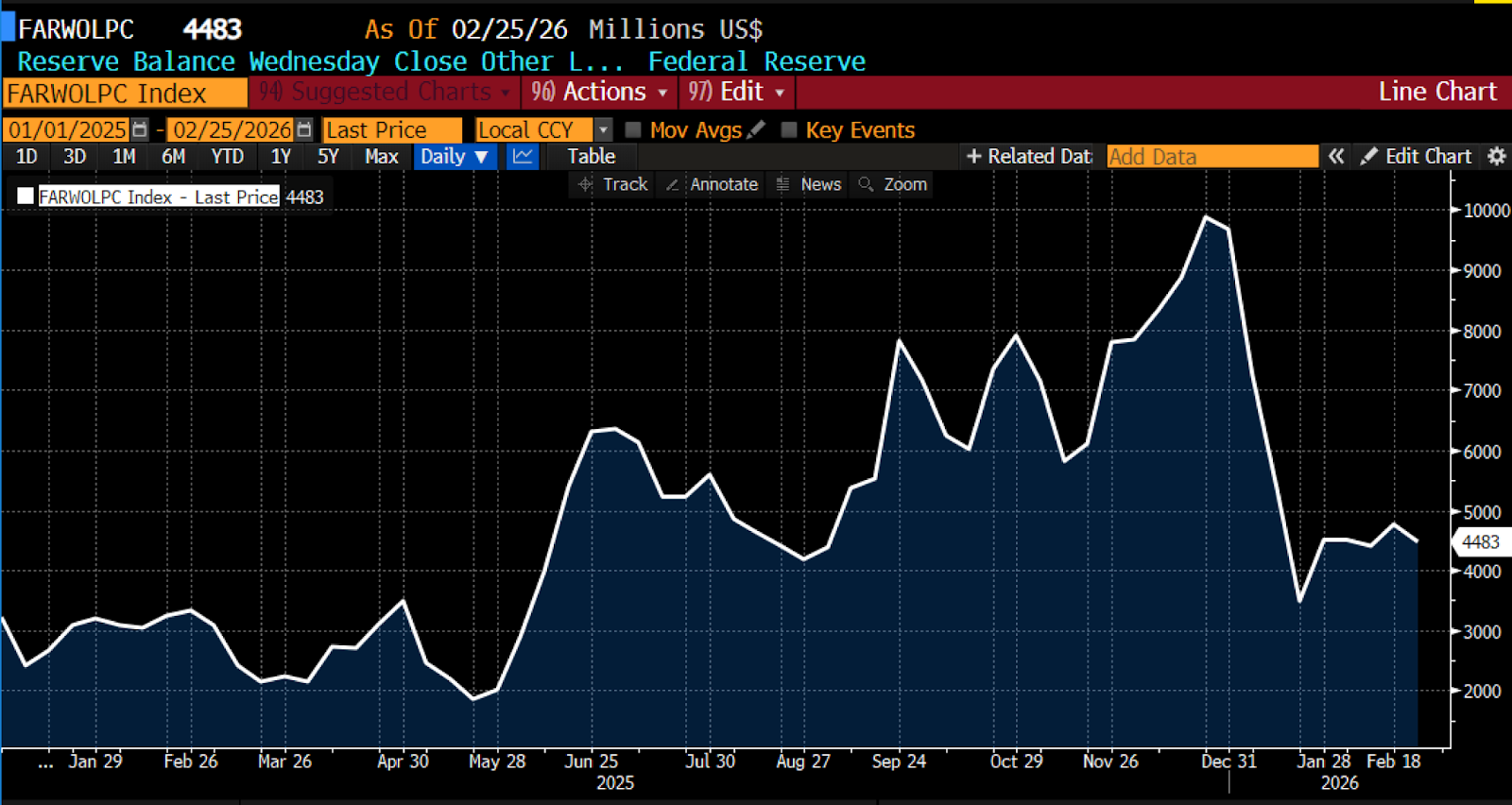
As early as October 2025, faint indications of duress were seen in funding markets. It is reminiscent of borrowing at the discount window several months before a handful of regional banks, most notably Silicon Valley Bank, became distressed.
The pattern is no longer theoretical. Thrasio’s bankruptcy (Feb 2024) exposed the fragility of acquisition-heavy, private-credit-funded roll-up models. Tricolor’s funding strains followed (Nov–Dec 2024), then First Brands’ alleged collateral double-pledging surfaced (late Jan 2025). More recently, Blue Owl gated withdrawals from a retail credit vehicle (early Feb 2026), and an Apollo-managed BDC (business development company) cut its payout and marked down assets (mid-Feb 2026). None were systemic events, but together they form a cadence.
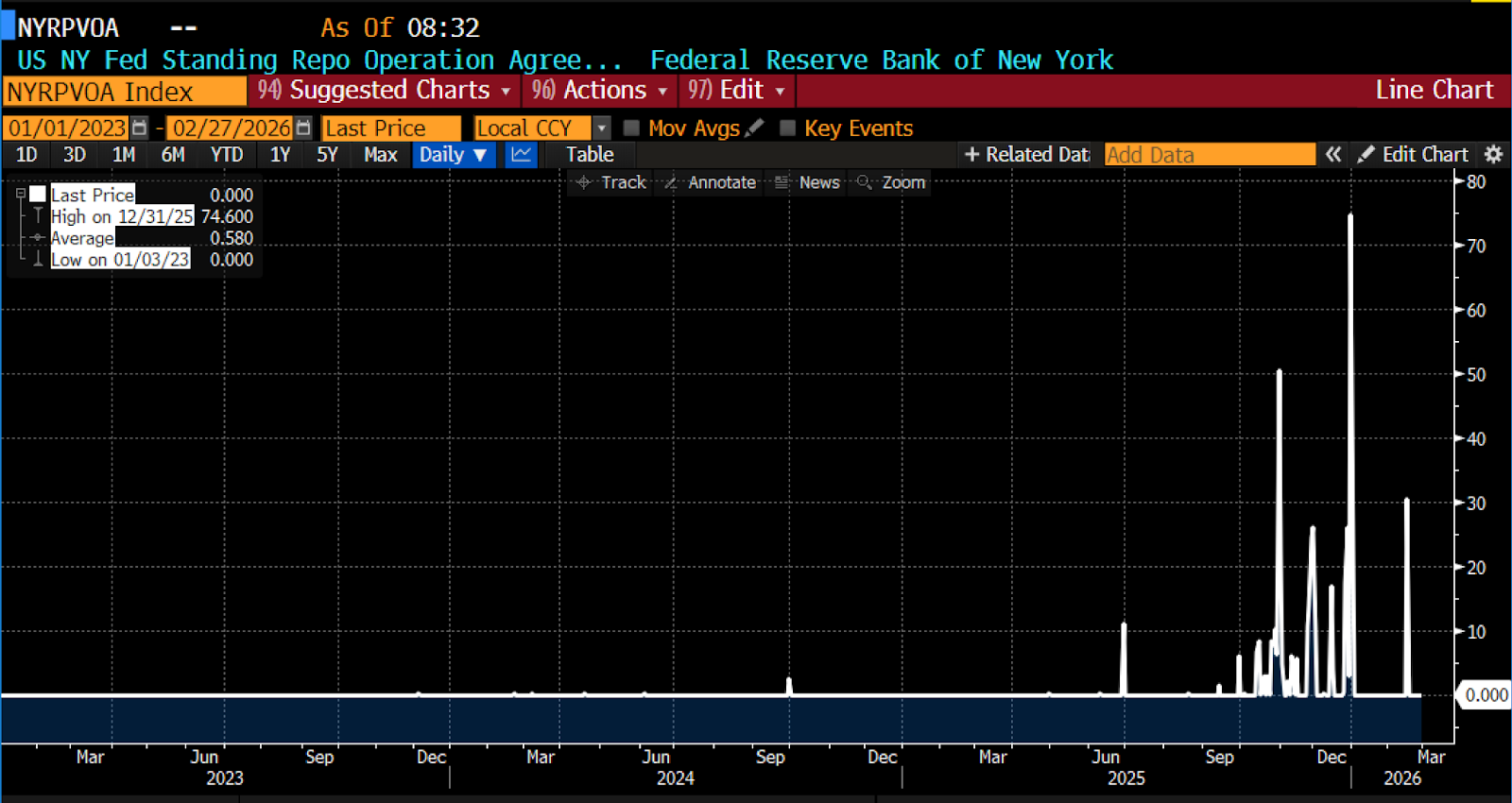
The private credit markets are not large in relation to other financial markets — estimated at $2 trillion globally — but contagion is the prevalent concern, especially with markets already spooked about the radically transformative possibilities of artificial intelligence. Credit spreads have widened toward levels seen during prior recession scares. Shares of business development companies — a liquid window into private credit — have been volatile amid redemption pressures and portfolio markdowns. Default rates remain contained. The tension lies not in realized losses but in fragility: when underwriting standards loosen during a boom, even a few surprises can alter perception quickly. As Jamie Dimon has warned, markets tend to rediscover risk in clusters. And while not conclusive, recent spikes in overnight repo usage and in discount window borrowing (primary credit) suggest that liquidity is being tapped more aggressively at the margin — not yet a crisis, but the kind of funding stress tremor that can signal trains beginning to move in the distance.
Overnight repo agreements accepted by the Federal Reserve (USD, 2023 – present)
(Source: Bloomberg Finance, LP)
In this environment, calls for tighter regulation are inevitable. History suggests that losses in nonbank finance will be followed by demands for expanded oversight, framed in the language of consumer protection and systemic stability. Yet regulation in finance has always had a dual character. It can restrain excess; it can also entrench incumbents. Large, highly regulated banks often benefit when compliance burdens rise, as smaller competitors and independent credit funds struggle to absorb new capital, reporting, and governance requirements. Consolidation can follow under the banner of safety.
From a public choice perspective, this dynamic is unsurprising. Regulators operate within political and bureaucratic incentives; rulemaking is shaped by concentrated interests more effectively than by dispersed borrowers. Regulation can as easily serve as a barrier to entry that protects established institutions as a safeguard for the public (consumers). Austrian economics adds a deeper analytical layer: cycles of credit expansion and malinvestment reflect distorted price signals — in particular, prolonged periods of artificially low interest rates and abundant liquidity — not merely supervisory gaps.
An alternative approach would focus less on expanding prescriptive rules and more on restoring the chastising force of market discipline. Funding structures that promise periodic liquidity while holding illiquid loans should carry explicit gating provisions and buffers that investors clearly understand. Collateral transparency could be improved through independent third-party registries — or tokenization — to reduce the scope for double pledging without micromanaging lending decisions.
Federal Reserve Discount Window, primary credit activity (millions of USD, 2025 – present)
(Source: Bloomberg Finance, LP)
Most importantly, losses must remain losses. When investors in private credit funds, BDCs, or warehouse facilities bear the consequences of underwriting errors, pricing adjusts and standards tighten organically. Attempts to soften or socialize those losses, whether through forbearance or implicit guarantees, delay adjustment and encourage the next cycle of excess. Market signals, though painful, are information-rich.
Private credit serves a legitimate economic role. It finances projects and borrowers traditional banks may not serve, which in turn supports development, expansion, and entrepreneurial risk-taking. It should be lost on no one that post-2008 regulatory shifts, including rescuing banks from their own mistakes, paved the way for the rise of private credit. The goal should not be suppression but transparency and aligned risk-sharing rather than regulatory arbitrage. If policymakers respond by expanding complex rulebooks that advantage the largest institutions, they will reduce competition while doing little to prevent future misallocations. A system grounded in transparency, capital at risk, and the discipline of profit and loss offers a more durable path than yet another gormless twist of the regulatory ratchet.