Note: As of January 31, 2025, data for four of the 24 components of the Business Conditions Monthly indicators have not yet been published. While the remaining suspended economic data are expected to be released prior to the next Business Conditions Monthly report, the resulting estimates should be regarded as preliminary. Interpretations will remain tentative until several months of subsequent releases and revisions have accumulated, allowing for a more stable and reliable assessment of both data quality and overarching trends.
The two most recent inflation data releases offer a mixed but gradually improving signal, with broad disinflationary trends emerging alongside persistent pockets of price strength. January’s Consumer Price Index (CPI) report from the US Bureau of Labor Statistics came in notably cooler than a typical start to the year, when firms often reset prices. Headline inflation rose a mere 0.17 percent month-over-month and the year-over-year rate eased to 2.4 percent, supported by softer energy and food prices, flat core goods, and modest slowing in rents. At the same time, discretionary services such as airfares, recreation, and transportation remained firm, and the share of categories posting faster price increases broadened, underscoring that progress toward lower inflation remains uneven. The Fed’s preferred core Personal Consumption Expenditure (PCE) gauge told a somewhat firmer late-year story, rising 0.36 percent in December and 3.0 percent year-over-year, driven largely by recreation services, financial services, and tariff-sensitive goods, while consumers continued rotating spending away from goods toward services even as income growth lagged and the saving rate slipped to a three-year low. Together the CPI and PCE data suggest inflation is gradually stabilizing but still shaped by sector-specific pressures and evolving consumer behavior, leaving the outlook balanced between continued disinflation and lingering strains on household budgets.
US labor market conditions reflect a delicate transition from prolonged cooling toward a tentative, uneven recovery, with recent benchmark revisions reshaping the underlying narrative. Annual revisions to the January jobs report reduced the level of end-2025 payrolls by roughly one million jobs and showed that hiring momentum had been far weaker than previously understood, with average monthly job growth revised down to just 15,000 last year and several months of outright contraction. Despite this backward-looking downgrade, January’s headline payroll gain of 130,000 and a drop in the unemployment rate to 4.28 percent, alongside rising labor force participation and a modest increase in weekly earnings, suggest the labor market may be stabilizing after nearly two years of stall-speed hiring that began in mid-2024 and intensified during 2025. Job creation remains highly concentrated, however, in government-proximate fields, with health care and social assistance accounting for the majority of gains, while federal employment and financial activities continue to contract and manufacturing only recently returned to modest growth. Forward-looking indicators reinforce the picture of a labor market that is no longer tightening but not collapsing either: ADP data showed private payrolls rising just 22,000 in January, reflecting stagnant hiring at both large firms and small businesses even as layoffs remain relatively contained, and wage growth for job changers slowed to about 6.4 percent, signaling cooling bargaining power. Meanwhile, the Job Openings and Labor Turnover Survey (JOLTS) report points to weakening labor demand, with job openings falling to 6.54 million and the openings-to-unemployed ratio dropping to 0.87: the lowest since early 2021, while quits and layoffs hold at subdued levels, indicating low churn rather than widespread job losses. Taken together, revisions, payroll gains, and vacancy data suggest the labor market has shifted from tight to balanced, with employment growth hovering near breakeven and inflation pressures from wages easing, leaving a recovery path that appears real but still sensitive to broader economic and policy conditions.
Activity across the goods-producing side of the economy presents a mixed but strategically driven expansion, with traditional consumer-oriented manufacturing still lagging while investment-heavy sectors show clearer momentum. The ISM manufacturing new-orders index surged into expansionary territory in January — its strongest reading in nearly four years — signaling a pickup in factory demand, supported by depleted inventories and increased capital spending in areas such as aircraft, electronics, primary metals, and energy products. Domestic durable goods production has risen about 1.5 percent since last spring, led by gains of roughly 6.8 percent in aircraft and 5.4 percent in electronics, while output tied more closely to consumer demand (vehicles, furniture, and textiles) remains subdued or declining. Inventory dynamics are playing a key role: retail inventories relative to sales remain about 12 percent below pre-pandemic norms, wholesale and manufacturer stocks have been drawn down, and imports of real consumer goods have fallen roughly 14 percent compared with 2024 averages, implying future production must rise or supply gaps widen. At the same time, forward-looking surveys show growth losing some momentum — the S&P Global manufacturing PMI eased to 51.2 in February, output slipped, and employment fell close to neutral — suggesting that while strategic capital investment and factory construction in semiconductors, chemicals, and transportation equipment point to stronger capacity ahead, the near-term manufacturing rebound remains uneven and concentrated in policy-favored or high-value sectors rather than broad-based consumer goods.
The services economy continues to expand but is showing signs of cooling demand, softer hiring, and renewed cost pressures that could complicate the inflation outlook. The ISM Services PMI held steady at 53.8 in January, indicating ongoing growth, yet underlying components weakened: new orders slowed to 53.1, export demand faded, and the employment subindex slipped toward neutral at 50.3, all pointing to a slower pace of hiring even as production accelerated temporarily. Survey respondents increasingly view inventories as excessive and expect activity to soften in coming months, a view reinforced by S&P Global’s flash services PMI easing to 52.3 in February (its lowest level since April 2025) alongside declines in new orders and employment. Despite cooling demand, price pressures remain a concern, with input costs rising more broadly in January and prices charged jumping to 58.3 in February, the highest since mid-2025, highlighting ongoing cost pass-through in discretionary areas such as travel, recreation, and transportation. The broader composite PMI has also drifted lower to 52.3, signaling slower overall growth and subdued hiring momentum across the economy. The service sector appears to be transitioning from strong post-pandemic expansion toward a slower, more cost-sensitive phase, where demand growth is moderating, employment gains are flattening, and price dynamics, rather than output, are becoming the central issue for policymakers.
Recent readings on consumer and business sentiment suggest stabilization rather than a full rebound, with confidence improving modestly even as uncertainty and labor-market concerns linger beneath the surface. The Conference Board’s consumer confidence index rose to 91.2 in February, supported by a notable improvement in forward-looking expectations around income, employment, and business conditions, while the University of Michigan’s sentiment gauge climbed to a six-month high of 57.3 as short-term inflation fears eased and year-ahead inflation expectations fell to 3.5 percent. American households appear more willing to plan big-ticket purchases and maintain spending on services, yet the picture remains cautious: assessments of current conditions weakened slightly, job security concerns remain elevated, and the perceived probability of losing one’s job is still near post-pandemic highs. Small business sentiment tells a similar story of guarded resilience: the National Federation of Independent Business optimism index slipped marginally to 99.3 as rising uncertainty and softer hiring plans weighed on confidence, even as expected real sales improved, credit conditions eased, and capital spending stayed firm, with 60 percent of owners reporting recent outlays. Hiring intentions have cooled and fewer firms report difficulty finding workers, reflecting a labor market that is no longer overheated, while price-setting behavior shows mixed signals, with fewer businesses raising prices currently but more planning increases ahead. Combined, the sentiment data across households and firms point to an economy that is steady but cautious: inflation fears are easing and spending expectations remain intact, yet persistent uncertainty about growth and employment continues to limit enthusiasm and keep confidence fragile rather than robust.
Recent consumption data point to a resilient but uneven consumer environment, where underlying demand remains intact despite softer headline readings and short-term volatility. December retail sales were flat month over month, likely reflecting a pull-forward of holiday spending into November promotions rather than a collapse in demand, with year-over-year growth easing to 2.4 percent but discretionary services — such as food service and drinking places – still expanding at a solid 4.7 percent pace, signaling continued willingness to spend on experiences. Monthly gains were limited to five of thirteen retail categories, led by building materials and sporting goods, while traditional holiday segments like apparel and electronics declined, suggesting the effect of discount-driven demand shifts rather than broad retrenchment.
The core control group of retail sales slipped 0.1 percent, and overall real consumption growth appears to have moderated to roughly 2.8 percent in the fourth quarter, a slower but still positive pace supported by wealth effects and expectations for larger tax refunds early in 2026. Meanwhile, the auto sector illustrates the tension between steady demand and mounting affordability pressures: January light-vehicle sales dropped to a 14.85 million annualized rate following strong year-end incentives, with car sales down 3.6 percent year over year even as light-truck purchases held up modestly. Elevated auto-loan delinquencies and extended financing terms of up to seven years highlight the strain high rates are placing on household budgets, yet total vehicle sales in 2025 reached their strongest level since 2019, underscoring that consumption remains active but increasingly sensitive to pricing, financing conditions, and seasonal factors such as unusually cold weather.
Industrial production data point to a solid start for the goods-producing side of the economy in 2026, with January output rising 0.7 percent — the strongest monthly gain in nearly a year — driven largely by manufacturing and a weather-related surge in utility production. Factory output increased 0.6 percent, supported by gains in machinery, computers and electronics, motor vehicles, and construction-related materials such as concrete, suggesting capital expenditures and onshoring-related investment are becoming key drivers of growth. Durable goods production climbed 0.8 percent, and business equipment output rose 0.9 percent, reinforcing signs that firms are advancing capex plans as trade policy uncertainty eases and tax incentives encourage domestic investment. Capacity utilization moved higher into the mid-76 percent range, while stronger orders for core capital goods late in 2025 signal continued momentum ahead. Although some of the upside reflects downward revisions to prior months, the breadth of gains across strategic industries and business equipment indicates manufacturing may be entering a modest recovery phase after a prolonged period of softness.
The monetary policy backdrop reflects a Federal Reserve that is increasingly cautious about easing, even as growth moderates and labor-market risks linger. Minutes from the January FOMC meeting show broad agreement to hold rates steady, with only a small minority favoring cuts and a growing share of policymakers emphasizing both credibility and the possibility of keeping policy restrictive for longer — or even tightening again, if disinflation stalls. This more balanced, “two-sided” policy framing comes as economic growth slowed to a 1.4 percent annualized pace in the fourth quarter, partly due to a prolonged government shutdown that reduced federal services and weighed on consumption and trade. While business investment — particularly in information processing equipment tied to artificial-intelligence spending — remains a bright spot, softer consumer momentum and persistent core PCE inflation near three percent leave the Fed navigating a delicate trade-off between supporting a fragile expansion and ensuring inflation expectations remain anchored.
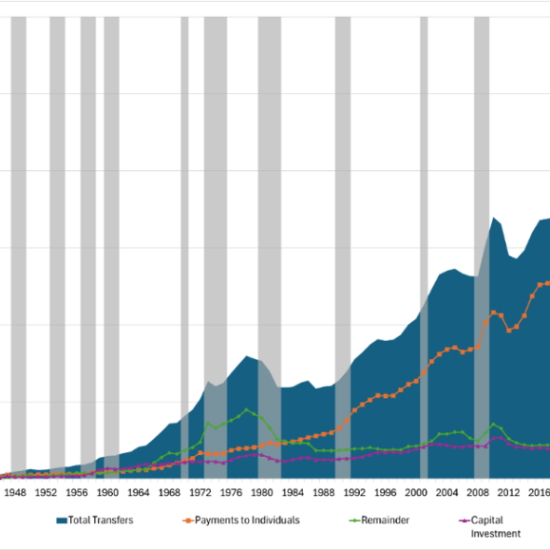
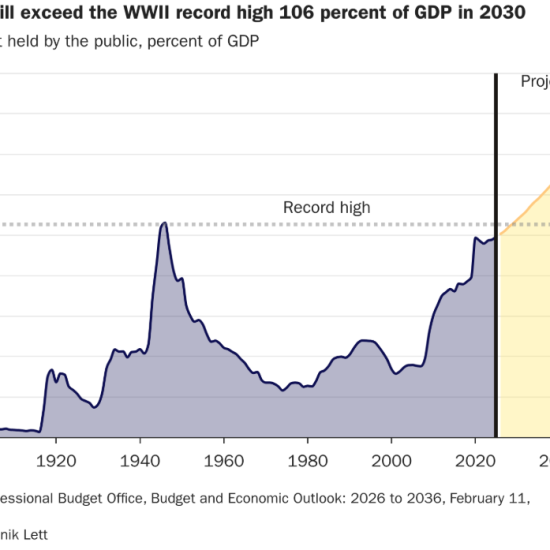
Fiscal and trade policy, meanwhile, are introducing significant uncertainty that interacts directly with monetary conditions. The Supreme Court’s invalidation of key tariffs imposed under the International Emergency Economic Powers Act on February 20 has complicated the administration’s fiscal arithmetic by threatening hundreds of billions in expected revenue and raising the prospect of large refunds, potentially widening already substantial budget deficits tied to recent tax legislation. At the same time, the administration’s attempt to replace those tariffs with new global levies has unsettled trading partners and could strain existing agreements with the EU, India, China, and key Asian allies, increasing the risk of renewed trade frictions even as most countries are likely to maintain negotiated frameworks for now. Together, those developments suggest a policy mix in which tighter fiscal constraints, evolving trade rules, and a more cautious Federal Reserve are interacting in ways that could dampen near-term growth volatility while keeping inflation, investment decisions, and global supply chains highly sensitive to political and legal developments.
The US economy continues to push forward, though increasingly under the influence of policy stimulus, financial conditions, and structural shifts rather than broad-based organic momentum. Consumer spending and services activity remain relatively firm (supported by tax relief, easing credit conditions, and gradually-moderating inflation) even as goods production, hiring, and capital investment advance more unevenly. Price pressures are cooling but remain sectorally uneven, leaving elevated living costs and tariff pass-through weighing on real purchasing power and business margins. Labor markets appear balanced yet fragile following sizable downward revisions to prior hiring data, while growth is increasingly driven by investment-heavy manufacturing and resilient experience-based consumption rather than widespread wage gains or strong employment expansion.
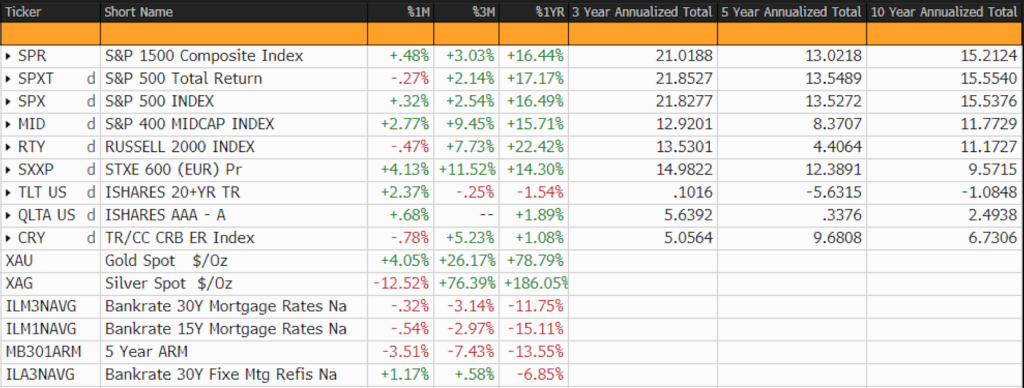
At the same time, monetary policy remains cautious amid credibility concerns, fiscal arithmetic has grown more uncertain after tariff-related legal challenges, and evolving trade policies continue to inject volatility into supply chains and corporate planning. Overlaying that backdrop is the accelerating influence of artificial intelligence: rising expectations of productivity gains and capital deepening coexist with anxieties that automation may expand opportunities for highly skilled workers while compressing prospects for marginal or routine labor, complicating wage dynamics and longer-term consumption trends. Market behavior, including strong rallies in gold and silver (both of which have fallen from their highs, but remain highly elevated) reflects the broader unease, signaling skepticism not about imminent recession, but about the durability and tradeoffs embedded in the current policy mix. Taken together, the economy appears to be navigating a late-cycle phase marked by slower but still positive growth, easing inflation, and technological transition, leaving the near-term outlook cautiously constructive but highly sensitive to policy decisions and structural changes in productivity.